


Basics Of Piping And Instrumentation Diagram (p&id)
Category: Tutorials
- views: 246
- date: 20 March 2026
- posted by: 0nelove
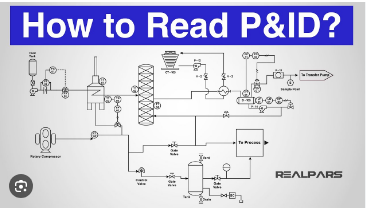
Basics Of Piping And Instrumentation Diagram (p&id)
Published 3/2026
Created by Alaa mamdouh ali mohamed
MP4 | Video: h264, 1280x720 | Audio: AAC, 44.1 KHz, 2 Ch
Level: All Levels | Genre: eLearning | Language: ar-AR | Duration: 8 Lectures ( 1h 50m ) | Size: 662.42 MB
Understand P&ID symbols, instruments, valves, and control loops to confidently read and analyze process diagrams
What you'll learn
✓ fundamental knowledge in piping and instrumentation diagram (P&ID)
✓ How to read P&ID
✓ Be familiar with P&IDs Symbols
✓ Overview about Isolation Philosophy
✓ Examples
Requirements
● Participants are expected to have a fundamental background in chemical, mechanical, or related engineering disciplines. No prior knowledge of P&IDs is necessary.
Description
Piping and Instrumentation Diagrams (P&IDs) are essential documents used in process engineering, oil & gas, chemical plants, power plants, and many other industrial facilities. These diagrams illustrate how equipment, piping systems, valves, and instruments are connected within a process and how the entire system is monitored and controlled.
In this course, you will learn the fundamentals of Piping and Instrumentation Diagrams (P&IDs) step by step. The course is designed to help students, engineers, technicians, and industry professionals understand how to read, interpret, and analyze P&ID drawings used in real industrial applications.
We will begin with the basic concepts of process diagrams and the role P&IDs play in engineering design and plant operations. Then we will explore common P&ID symbols, piping components, valves, and different types of instruments used in industrial systems. You will also learn how instruments are tagged, how control loops function, and how these elements are represented on P&ID drawings.
Throughout the course, practical examples will be used to explain how process equipment and instrumentation interact within a system. This will help you develop the skills needed to confidently interpret P&ID diagrams used in engineering projects.
By the end of this course, you will have a strong understanding of P&ID fundamentals and will be able to read and understand piping and instrumentation diagrams used in real-world industrial environments.
Who this course is for
■ This course is designed for beginner-level chemical engineers who wish to understand project P&IDs, as well as Process engineers aiming to start a career in instrumentation design engineering.
■ Engineering students, field operators, plant operators, mechanical engineer, I&C engineer and process engineer
https://nitroflare.com/view/C79061FDC2A07DD/Basics_of_Piping_and_Instrumentation_Diagram_%28P%26amp%3BID%29.rar
https://rapidgator.net/file/7ad4fddac8d6c7556a78df085fc06d93/Basics_of_Piping_and_Instrumentation_Diagram_(P&ID).rar.html
https://rapidgator.net/file/7ad4fddac8d6c7556a78df085fc06d93/Basics_of_Piping_and_Instrumentation_Diagram_(P&ID).rar.html
We need your support!
Make a donation to help us stay online

Bitcoin (BTC)
bc1q08g9d22cxkawsjlf8etuek2pc9n2a3hs4cdrld

Bitcoin Cash (BCH)
qqvwexzhvgauxq2apgc4j0ewvcak6hh6lsnzmvtkem

Ethereum (ETH)
0xb55513D2c91A6e3c497621644ec99e206CDaf239

Litecoin (LTC)
ltc1qt6g2trfv9tjs4qj68sqc4uf0ukvc9jpnsyt59u

USDT (ERC20)
0xb55513D2c91A6e3c497621644ec99e206CDaf239

USDT (TRC20)
TYdPNrz7v1P9riWBWZ317oBgJueheGjATm
Information |
|||
 |
Users of GUESTS are not allowed to comment this publication. | ||