


Google Earth Engine: Algae Bloom Analysis Seasonal Changes
Category: Tutorials
- views: 98
- date: 27 July 2025
- posted by: 0nelove
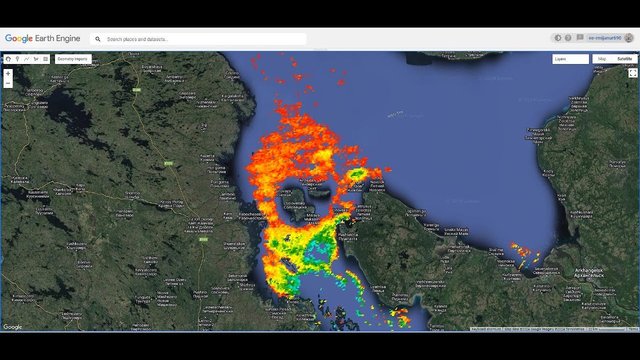
Google Earth Engine: Algae Bloom Analysis Seasonal Changes
Published 7/2025
Created by Micah Kutoto
MP4 | Video: h264, 1280x720 | Audio: AAC, 44.1 KHz, 2 Ch
Level: Beginner | Genre: eLearning | Language: English | Duration: 26 Lectures ( 3h 33m ) | Size: 1.55 GB
Analysis of Seasonal Changes of Algae bloom in Lake Elementaita using Google Earth Engine. GIS and Remote Sensing.
What you'll learn
Understand advanced concepts about Google Earth Engine.
Learn how to perform Analysis in Google Earth Engine.
Perform Spectral Index Calculation for Analysis.
Complete a case study about Algae Blooms.
Basics of Google Earth Engine and its jаvascript API.
Importing, filtering, and visualizing satellite imagery.
Creating custom algae bloom detection algorithms.
Using spectral indices to monitor water quality.
Time-series and trend analysis of bloom events.
Requirements
You need basic understanding of Programming. Familiar with jаvascript Google Earth Engine. Basics of Geospatial Data Analysis.
Description
This course provides a comprehensive, hands-on introduction to detecting, monitoring, and analyzing algae blooms using the powerful cloud‑based platform Google Earth Engine (GEE) and its jаvascript API. You'll gain practical experience harnessing satellite imagery—such as Sentinel‑2 and CHIRPS Rainfall Data—while learning to apply advanced spectral indices, including NDTI, NDWI, and Chlorophyll‑a proxies, to quantify water quality and vegetation health. Throughout the course, you'll learn to create dynamic time‑series visualizations, geospatial overlays, and interactive maps that reveal both spatial and temporal patterns of harmful algal blooms (HABs) in diverse environments, spanning freshwater lakes, rivers, reservoirs, and coastal zones.Using a series of real‑world case studies, you'll develop automated remote sensing workflows that streamline data collection, processing, and analysis—all performed directly in the browser. This approach enables you to swiftly generate downloadable outputs, reports, and geo‑referenced maps suitable for environmental monitoring, academic research, or government policy and resource management.By the end of the course, you'll confidently navigate GEE's interface, write modular jаvascript code, design reusable algorithms, and interpret complex results. Whether you're an environmental scientist, GIS professional, graduate student, or policy advisor, you'll come away with the skills to apply satellite-driven insights to address pressing water quality and ecosystem health challenges.
Who this course is for
This Course is meant for Beginners in Google Earth Engine. Environmental scientists and researchers interested in aquatic ecosystems. Remote sensing and GIS professionals looking to expand their geospatial skills. Students in environmental science, ecology, hydrology, or geoinformatics. NGOs and government agencies involved in water resource management. Anyone interested in leveraging satellite data to combat the threat of harmful algal blooms.
Buy Premium From My Links To Get Resumable Support and Max Speed
https://rapidgator.net/file/f6e3f24e732fa4e63598f7ee499a3ca5/Google_Earth_Engine_Algae_Bloom_Analysis_Seasonal_Changes.part2.rar.html
https://rapidgator.net/file/74cf1f0617b7ce6374e312e3f4e514ab/Google_Earth_Engine_Algae_Bloom_Analysis_Seasonal_Changes.part1.rar.html
https://nitroflare.com/view/EAB4B3FCAE52725/Google_Earth_Engine_Algae_Bloom_Analysis_Seasonal_Changes.part2.rar
https://nitroflare.com/view/8AE418A6B1C3F01/Google_Earth_Engine_Algae_Bloom_Analysis_Seasonal_Changes.part1.rar
We need your support!
Make a donation to help us stay online

Bitcoin (BTC)
bc1q08g9d22cxkawsjlf8etuek2pc9n2a3hs4cdrld

Bitcoin Cash (BCH)
qqvwexzhvgauxq2apgc4j0ewvcak6hh6lsnzmvtkem

Ethereum (ETH)
0xb55513D2c91A6e3c497621644ec99e206CDaf239

Litecoin (LTC)
ltc1qt6g2trfv9tjs4qj68sqc4uf0ukvc9jpnsyt59u

USDT (ERC20)
0xb55513D2c91A6e3c497621644ec99e206CDaf239

USDT (TRC20)
TYdPNrz7v1P9riWBWZ317oBgJueheGjATm
Information |
|||
 |
Users of GUESTS are not allowed to comment this publication. | ||