


Dielectric Materials: Fundamentals To Modern Technology
Category: Tutorials
- views: 76
- date: 29 May 2025
- posted by: 0nelove
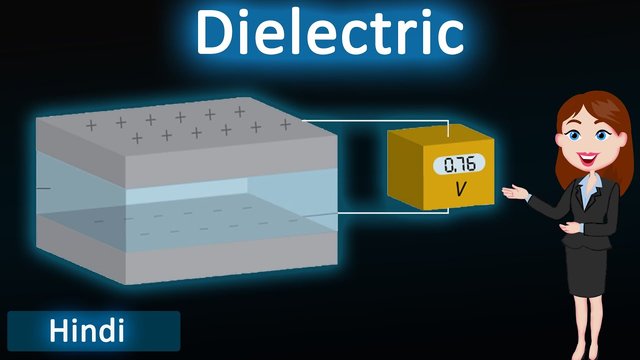
Dielectric Materials: Fundamentals To Modern Technology
Published 5/2025
MP4 | Video: h264, 1280x720 | Audio: AAC, 44.1 KHz, 2 Ch
Language: English | Duration: 11h 22m | Size: 3.58 GB
Key Principles and Emerging Technologies in Dielectrics
What you'll learn
Describe the fundamental properties and types of dielectric materials, including their molecular structure, polarization mechanisms, and common applications
Analyze the behavior of dielectric materials under different electric field conditions and explain how these properties influence capacitance and energy storage
Evaluate the suitability of various dielectric materials for specific engineering and electronics applications based on permittivity, dielectric strength, and l
Apply the principles of dielectric theory to solve problems in capacitor design, insulation systems, and electronic component performance
Requirements
Course Prerequisites: Basic Physics: Students should have a foundational understanding of classical physics, particularly electromagnetism (e.g., electric fields, charge, and potential). Introductory Materials Science or Solid-State Physics: Familiarity with atomic structure, bonding, and crystal structures is essential for understanding material behavior. Mathematics Proficiency: Competency in algebra, calculus, and basic differential equations is necessary to follow derivations and solve field-related equations. Electrical Engineering Fundamentals (Recommended): Prior coursework in circuits or electrical systems is helpful, especially for application-oriented topics like capacitors and insulation systems.
Description
Course Description for Dielectric Materials: Fundamentals to Modern TechnologyThis course offers a comprehensive exploration of dielectric materials, focusing on their fundamental principles, polarization mechanisms, and practical applications in modern technology. Students will gain an in-depth understanding of how dielectrics interact with electric fields, the different types of polarization, and the factors influencing dielectric behavior. The course covers a broad spectrum of materials—from polymers and ceramics to advanced composites—and their roles in electronics, energy storage, sensors, and emerging smart technologies.In addition to theoretical foundations, the course emphasizes real-world applications such as capacitor design, insulating materials, and dielectric resonators used in telecommunications and microwave devices. Learners will study the influence of temperature, frequency, and material structure on dielectric properties, enabling them to tailor materials for specific engineering needs.Through a blend of lectures, case studies, and hands-on examples, participants will develop the skills to analyze, characterize, and optimize dielectric materials for innovative technological solutions. The course also explores cutting-edge research areas including nanodielectrics, metamaterials, and environmentally sustainable dielectrics.This course is ideal for students, researchers, and professionals in materials science, electrical engineering, applied physics, and related fields who seek to deepen their knowledge of dielectric materials and contribute to advancements in electronics, energy systems, and smart device technology.
Who this course is for
This course is designed for: Undergraduate and Graduate Students Especially those studying Electrical Engineering, Materials Science, Applied Physics, or Electronics Engineering who want a deeper understanding of dielectric behavior in real-world systems. Professionals and Engineers Practicing engineers in power systems, semiconductor manufacturing, or electronic component design who need to strengthen their knowledge of insulating materials, capacitors, or high-voltage applications. Researchers and Academics Early-career researchers working in materials development, nanotechnology, or energy storage systems who want to understand how dielectric properties affect performance and reliability. Technically Curious Learners Individuals with a solid science or engineering background who are curious about how dielectrics work, their applications, and their role in modern electronic systems.
Buy Premium From My Links To Get Resumable Support and Max Speed
https://rapidgator.net/file/25d2f967ae8a6dc290e8c235a9ff4566/Dielectric_Materials_Fundamentals_to_Modern_Technology.part4.rar.html
https://rapidgator.net/file/ff28aa89e2a5e814d604da290074d971/Dielectric_Materials_Fundamentals_to_Modern_Technology.part3.rar.html
https://rapidgator.net/file/41b33c45486aa437b65642b62801927c/Dielectric_Materials_Fundamentals_to_Modern_Technology.part2.rar.html
https://rapidgator.net/file/5403c676120ffe1b3ca95f1814a44e4b/Dielectric_Materials_Fundamentals_to_Modern_Technology.part1.rar.html
https://nitroflare.com/view/B02E955242F24BF/Dielectric_Materials_Fundamentals_to_Modern_Technology.part4.rar
https://nitroflare.com/view/A712F298447BF63/Dielectric_Materials_Fundamentals_to_Modern_Technology.part3.rar
https://nitroflare.com/view/6AD712953EBE34D/Dielectric_Materials_Fundamentals_to_Modern_Technology.part2.rar
https://nitroflare.com/view/FA8E6ADFB1C2C61/Dielectric_Materials_Fundamentals_to_Modern_Technology.part1.rar
We need your support!
Make a donation to help us stay online

Bitcoin (BTC)
bc1q08g9d22cxkawsjlf8etuek2pc9n2a3hs4cdrld

Bitcoin Cash (BCH)
qqvwexzhvgauxq2apgc4j0ewvcak6hh6lsnzmvtkem

Ethereum (ETH)
0xb55513D2c91A6e3c497621644ec99e206CDaf239

Litecoin (LTC)
ltc1qt6g2trfv9tjs4qj68sqc4uf0ukvc9jpnsyt59u

USDT (ERC20)
0xb55513D2c91A6e3c497621644ec99e206CDaf239

USDT (TRC20)
TYdPNrz7v1P9riWBWZ317oBgJueheGjATm
Information |
|||
 |
Users of GUESTS are not allowed to comment this publication. | ||