


Accessing SQL Server Databases from PowerShell
Category: Tutorials
- views: 352
- date: 18 December 2024
- posted by: AD-TEAM
Accessing SQL Server Databases from PowerShell
MP4 | Video: AVC 1280x720 | Audio: AAC 44KHz 2ch | Duration: 1 Hour | 135 MB
Genre: eLearning | Language: English
SQL Server is the Database engine used for all the enterprise tools part of the Microsoft ecosystem and PowerShell is the most popular scripting language. This course will teach you how to use PowerShell to read and write data from/to SQL Databases.
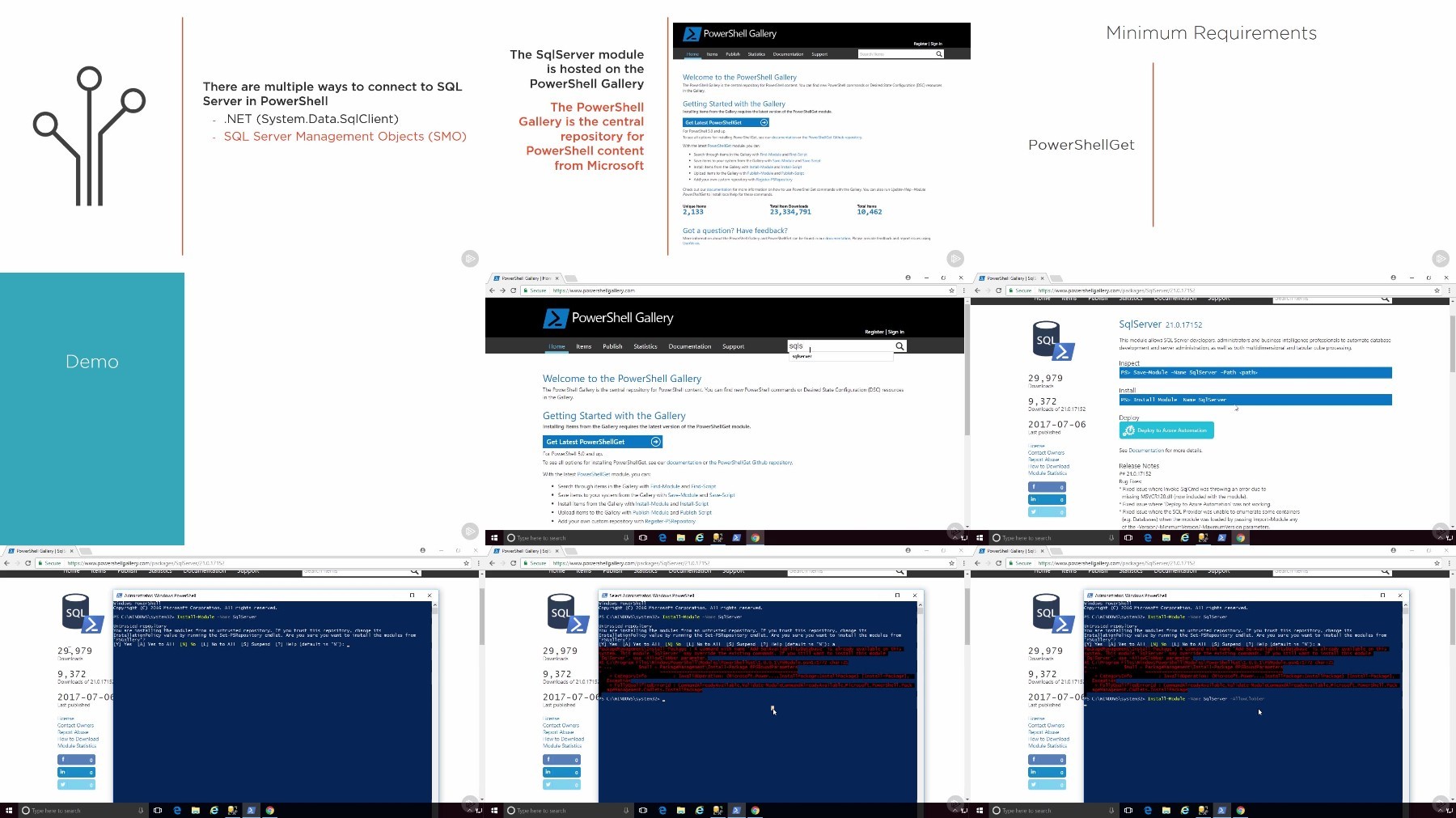
PowerShell is an awesome tool, and as an IT pro or a Developer you probably want to use its powerful automation potential to automate your own tasks. SQL Server is the database software of choice for organizations running in the Microsoft ecosystem. Instead of storing information from your PowerShell scripts in CSV or text files, you can store this information into a SQL Database and then use SQL Server's powerful reporting tools to create beautiful looking reports and historical data. In this course, Accessing SQL Server Databases from PowerShell, you'll learn how to use PowerShell to read and write data from/to a SQL Server database. First, you'll discover how to get the required PowerShell Module and how to connect to both a local and a remote SQL Server. Next, you'll explore how to use PowerShell to read data from a SQL Table. Finally, you'll learn how to use PowerShell to write information to an existing, or a brand-new SQL database. When you're finished with this course, you'll have the skills and knowledge of PowerShell needed to access SQL Server databases from PowerShell.
We need your support!
Make a donation to help us stay online

Bitcoin (BTC)
bc1q08g9d22cxkawsjlf8etuek2pc9n2a3hs4cdrld

Bitcoin Cash (BCH)
qqvwexzhvgauxq2apgc4j0ewvcak6hh6lsnzmvtkem

Ethereum (ETH)
0xb55513D2c91A6e3c497621644ec99e206CDaf239

Litecoin (LTC)
ltc1qt6g2trfv9tjs4qj68sqc4uf0ukvc9jpnsyt59u

USDT (ERC20)
0xb55513D2c91A6e3c497621644ec99e206CDaf239

USDT (TRC20)
TYdPNrz7v1P9riWBWZ317oBgJueheGjATm
Information |
|||
 |
Users of GUESTS are not allowed to comment this publication. | ||