


Basics of a clothing CAD
Category: Tutorials
- views: 146
- date: 16 July 2024
- posted by: AD-TEAM

Basics of a clothing CAD
Published 7/2024
Duration: 35m | .MP4 1280x720, 30 fps(r) | AAC, 44100 Hz, 2ch | 398 MB
Genre: eLearning | Language: English
Beginner's Guide: all the indispensable commands to start processing a garment
What you'll learn
Basic CAD clothing commands
Modelling skills
Pattern making process
Industrialisation of a pattern
Requirements
Basic knowledge of a computer
Description
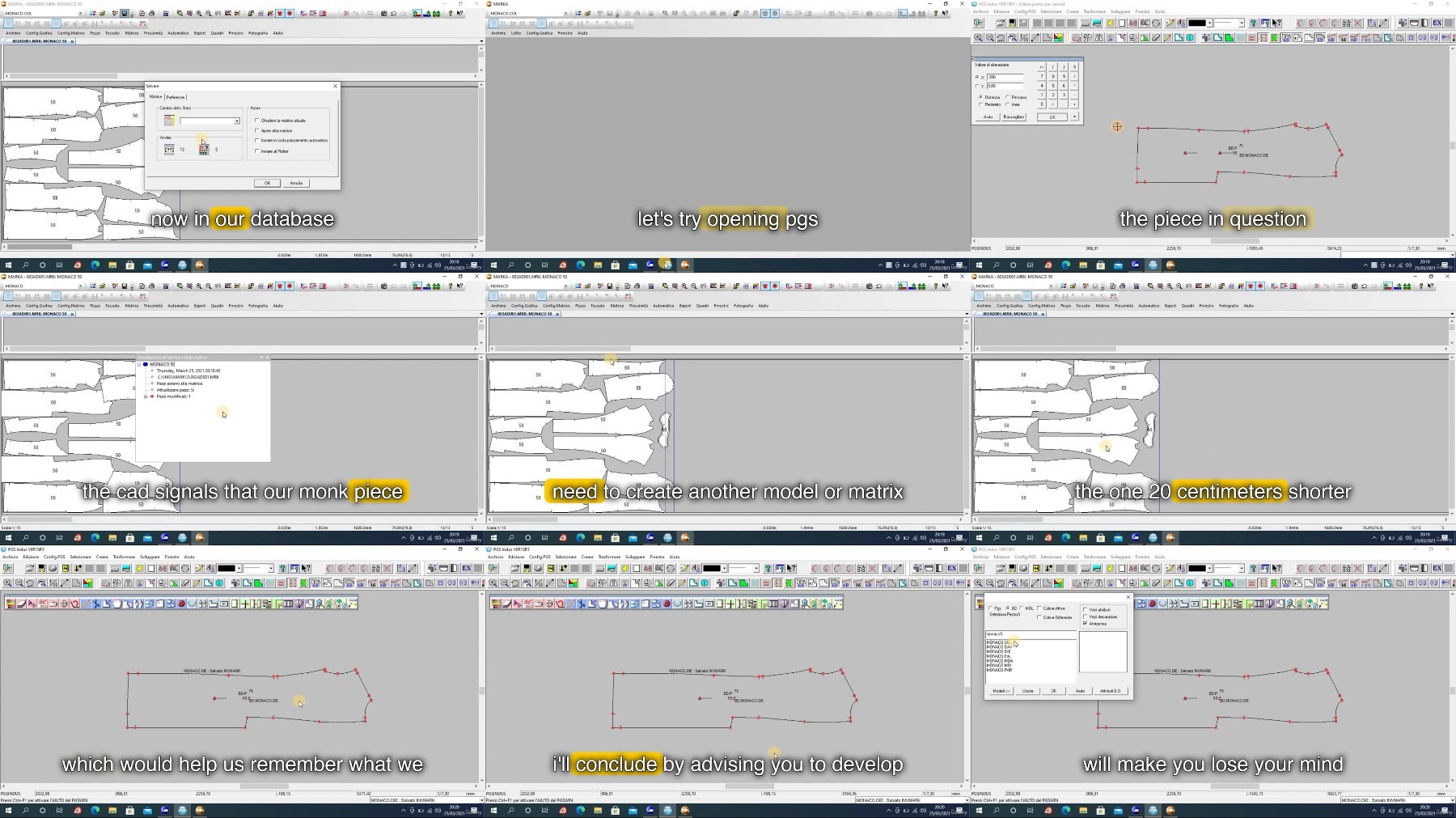
The video course aims to explain, step by step, the process by which a paper pattern of any garment goes from digital to paper format, to be edited, printed by plotter and finally cut. Essentially a simple guide made up of short videos covering the basic commands of Lectra V9R1 CAD, but it can be applied to any other garment CAD as the process remains the same and only the names of the commands change. The video course is therefore aimed at anyone who would like to work in the fashion industry but particularly those who would like to pursue a career as a CAD operator. It is recorded so that anyone following it does not lose focus and is full of useful tips that you would normally acquire after years of practice and experience in the industry. This course summarises everything you need to know to use a garment CAD system and make your way gradually into the fashion industry. In the first lesson you will learn the basic commands for modifying the pieces, in the second lesson you will learn how to use these pieces to create patterns and matrices, and in the third and final lesson you will learn how to use these matrices to create graphs that are indispensable for later cutting the garment.
Who this course is for:
Designers with little or no experience on clothing CAD
Fashion designers who want to learn how to modify pre-made garments themselves
Anyone who wants to pursue a career in the fashion industry, or simply wants to learn how to use clothing software
More Info
What you'll learn
Basic CAD clothing commands
Modelling skills
Pattern making process
Industrialisation of a pattern
Requirements
Basic knowledge of a computer
Description
The video course aims to explain, step by step, the process by which a paper pattern of any garment goes from digital to paper format, to be edited, printed by plotter and finally cut. Essentially a simple guide made up of short videos covering the basic commands of Lectra V9R1 CAD, but it can be applied to any other garment CAD as the process remains the same and only the names of the commands change. The video course is therefore aimed at anyone who would like to work in the fashion industry but particularly those who would like to pursue a career as a CAD operator. It is recorded so that anyone following it does not lose focus and is full of useful tips that you would normally acquire after years of practice and experience in the industry. This course summarises everything you need to know to use a garment CAD system and make your way gradually into the fashion industry. In the first lesson you will learn the basic commands for modifying the pieces, in the second lesson you will learn how to use these pieces to create patterns and matrices, and in the third and final lesson you will learn how to use these matrices to create graphs that are indispensable for later cutting the garment.
Who this course is for:
Designers with little or no experience on clothing CAD
Fashion designers who want to learn how to modify pre-made garments themselves
Anyone who wants to pursue a career in the fashion industry, or simply wants to learn how to use clothing software
More Info
We need your support!
Make a donation to help us stay online

Bitcoin (BTC)
bc1q08g9d22cxkawsjlf8etuek2pc9n2a3hs4cdrld

Bitcoin Cash (BCH)
qqvwexzhvgauxq2apgc4j0ewvcak6hh6lsnzmvtkem

Ethereum (ETH)
0xb55513D2c91A6e3c497621644ec99e206CDaf239

Litecoin (LTC)
ltc1qt6g2trfv9tjs4qj68sqc4uf0ukvc9jpnsyt59u

USDT (ERC20)
0xb55513D2c91A6e3c497621644ec99e206CDaf239

USDT (TRC20)
TYdPNrz7v1P9riWBWZ317oBgJueheGjATm
Information |
|||
 |
Users of GUESTS are not allowed to comment this publication. | ||