


Instructional Design in E - Learning Principles, Trends, and Opportunities
Category: eBooks
- views: 149
- date: 11 July 2026
- posted by: BeMyLove
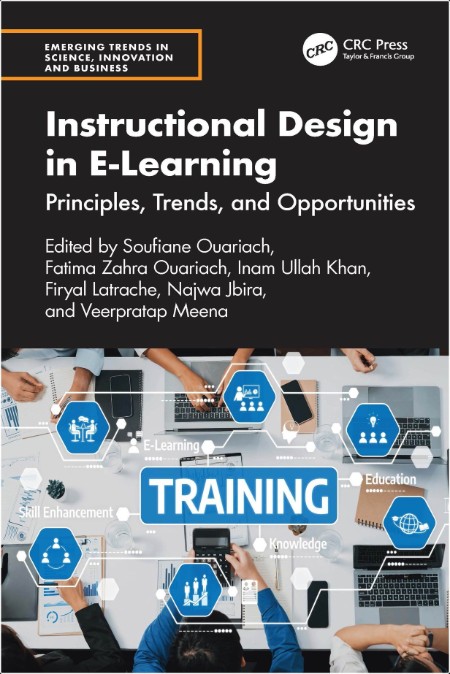
Instructional Design in E - Learning Principles, Trends, and Opportunities | 28.26 MB
Title: Instructional Design in E - Learning Principles, Trends, and Opportunities
Author: Soufiane Ouariach, Fatima Zahra Ouariach, Inam Ullah Khan, Firyal Latrache, Najwa Jbira
Category: Nonfiction, Computers, General Computing, Reference & Language, Education & Teaching, Educational Theory
Language: English | 352 Pages | ISBN: 9781040855348
Description:
This comprehensive guide examines the restructuring of instructional design principles and practices for digital learning environments. It combines established pedagogical principles with the latest technological innovations to help practitioners create effective, learner‑centered online experiences.
The volume grounds its recommendations in foundational instructional design models, including ADDIE, TPACK, and the Community of Inquiry framework, to demonstrate how these approaches are being reconfigured for digital transformation. It explores multimedia learning design through Cognitive Load Theory, Dual Coding Theory, and Mayer's Cognitive Theory of Multimedia Learning, offering guidance on optimizing the integration of text, images, audio, video and interactive elements. The text presents architectural frameworks for flipped classrooms using Small Private Online Courses and examines the integration of synchronous and asynchronous modalities in blended higher education. Accessibility is addressed through Universal Design for Learning and Web Content Accessibility Guidelines implementation strategies, while emotional design principles illustrate the creation of meaningful learner‑content connections. The volume explores emerging technologies, including GenAI integration within learning management systems for personalized feedback and intelligent tutoring, AI‑driven adaptive learning systems, and virtual reality and augmented reality applications that foster embodied cognition and situated learning across disciplines, from medical education to historical reconstruction.
This collection is designed for instructional designers, educational technologists and faculty members seeking evidence‑based strategies for digital course development. It will help graduate students, curriculum developers, and policymakers in promoting equitable access to quality online education.
DOWNLOAD:
https://rapidgator.net/file/23e8b780d3481e7e6ee1ddbfa38e235b/Instructional_Design_in_E-Learning_Principles_Trends_and_Opportunities.rar
https://nitroflare.com/view/5D2A55C03ABBA62/Instructional_Design_in_E-Learning_Principles_Trends_and_Opportunities.rar
We need your support!
Make a donation to help us stay online

Bitcoin (BTC)
bc1q08g9d22cxkawsjlf8etuek2pc9n2a3hs4cdrld

Bitcoin Cash (BCH)
qqvwexzhvgauxq2apgc4j0ewvcak6hh6lsnzmvtkem

Ethereum (ETH)
0xb55513D2c91A6e3c497621644ec99e206CDaf239

Litecoin (LTC)
ltc1qt6g2trfv9tjs4qj68sqc4uf0ukvc9jpnsyt59u

USDT (ERC20)
0xb55513D2c91A6e3c497621644ec99e206CDaf239

USDT (TRC20)
TYdPNrz7v1P9riWBWZ317oBgJueheGjATm
Information |
|||
 |
Users of GUESTS are not allowed to comment this publication. | ||