


Architecting a Framework for Edge AI Functional and Non - functional Requirements
Category: eBooks
- views: 71
- date: 6 June 2026
- posted by: BeMyLove
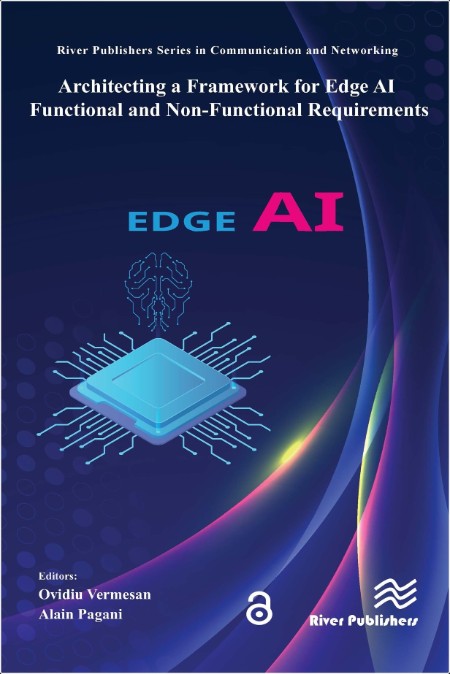
Architecting a Framework for Edge AI Functional and Non - functional Requirements | 13.51 MB
Title: Architecting a Framework for Edge AI Functional and Non-functional Requirements
Author: Ovidiu Vermesan, Alain Pagani
Category: Nonfiction, Computers, Advanced Computing, Artificial Intelligence, General Computing
Language: English | 187 Pages | ISBN: 9788743809616
Description:
This book presents a comprehensive exploration of the functional and non-functional requirements that define edge AI systems, including technical, ethical, legal, and regulatory dimensions. It offers a holistic perspective that spans hardware, software, the AI technology stack, and the data pipelines supporting applications across the micro-, deep-, and meta-edge continuum. Edge AI systems are evaluated through their key properties—functionality, performance, cost, dependability, and trustworthiness. The book closely interlinks these requirements with the concepts of system dependability and trust. Dependability is presented as the backbone of real-time edge AI performance, where services must be delivered reliably within strict timeframes. Trustworthiness is defined as the system's ability to meet both functional and non-functional requirements in a verifiable manner—ensuring transparency, correctness, and alignment with human oversight. The chapters emphasize how building trust in edge AI is not merely a technical task, but a collaborative process across technical, ethical, and legal/regulatory domains. Establishing trustworthiness requires the careful definition of requirements, measurement of key performance indicators (KPIs), continuous monitoring, transparent processes, and alignment with broader societal values. Written for researchers, engineers, and students eager to understand the next frontier of edge intelligence, the book invites readers to engage with cutting-edge discussions on performance, accountability, and responsibility in AI at the edge. It is both an academic resource and a practical guide for those seeking to design, validate, and deploy edge AI systems that are not only high-performing but also dependable, trustworthy, and socially aligned. Architecting a Framework for Edge AI Functional and Non-functional Requirements explores performance, dependability, and trust in edge AI. Covering hardware, software, ethics, law, and KPIs, it offers a holistic framework for building reliable, transparent, and socially aligned edge intelligence systems.
DOWNLOAD:
https://rapidgator.net/file/6829453547dfc44427068fb9e901e87a/Architecting_a_Framework_for_Ed_-_Ovidiu_Vermesan.rar
https://nitroflare.com/view/68D1121E18CD66A/Architecting_a_Framework_for_Ed_-_Ovidiu_Vermesan.rar
We need your support!
Make a donation to help us stay online

Bitcoin (BTC)
bc1q08g9d22cxkawsjlf8etuek2pc9n2a3hs4cdrld

Bitcoin Cash (BCH)
qqvwexzhvgauxq2apgc4j0ewvcak6hh6lsnzmvtkem

Ethereum (ETH)
0xb55513D2c91A6e3c497621644ec99e206CDaf239

Litecoin (LTC)
ltc1qt6g2trfv9tjs4qj68sqc4uf0ukvc9jpnsyt59u

USDT (ERC20)
0xb55513D2c91A6e3c497621644ec99e206CDaf239

USDT (TRC20)
TYdPNrz7v1P9riWBWZ317oBgJueheGjATm
Information |
|||
 |
Users of GUESTS are not allowed to comment this publication. | ||