


Civil War Camps and Soldier Health Sanitation and Military Effectiveness in the Union Army
Category: eBooks
- views: 469
- date: 4 June 2026
- posted by: BeMyLove
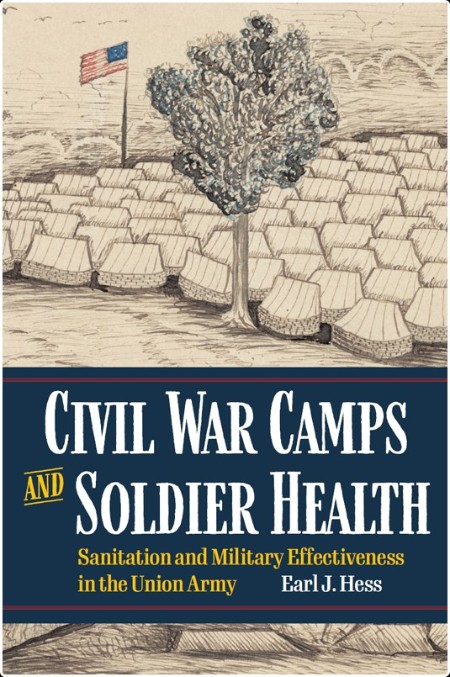
Civil War Camps and Soldier Health Sanitation and Military Effectiveness in the Union Army | 6.41 MB
Title: Civil War Camps and Soldier Health
Author: Earl J. Hess
Category: Nonfiction, Health & Well Being, Medical, Reference, History, Americas, United States, Civil War Period (1850-1877)
Language: English | 456 Pages | ISBN: 1606355058
Description:
An immersive analysis of camp life and soldiers' well-being during the Civil War
The Civil War was a watershed in public awareness of the many health-related issues soldiers faced while living in camps. Sanitarians among civilians and regular army officers attempted to meet those challenges by addressing a range of topics associated with preventive healthcare in the volunteer army. The US Sanitary Commission, a nongovernmental agency sanctioned by the Federal government, created a massive campaign to study conditions in semipermanent camps and advise unit commanders how to avoid unnecessary illness and curb soldier deaths by disease. Commission inspectors, mostly civilian physicians, examined camps from 1861 to early 1864 and filed more than 1,400 reports of their findings.
Earl J. Hess delves deeply into 280 of those reports, shedding new and startling light on camp conditions. Addressing camp situation, shelter, clothing, personal cleanliness, garbage disposal, latrines, food, cooking, water, alcohol, morale, recruit examination, smallpox vaccination, regimental hospitals, and officer supervision, the camp inspection returns are unique snapshots of what it was like to live in a Union army camp. The reports reveal that sanitation varied widely from unit to unit and across time periods. Volunteer regimental officers and surgeons were often unable to take sanitary principles seriously, and disposing of garbage and human waste was often nonexistent. Overall, the volunteer regiments did well enough to get by, but they did not achieve high marks for military effectiveness when it came to preventive healthcare.
Civil War Camps and Soldier Health is a thought-provoking, impeccably researched volume that enriches our understanding of the sanitation challenges facing the Union army camps as well as how these challenges were recorded and examined by early researchers.
DOWNLOAD:
https://rapidgator.net/file/1b4b88d19abddc23626108530b127583/Civil_War_Camps_and_Soldier_Health_Sanitation_and_Military_Effectiveness_in_the_Union_Army.rar
https://nitroflare.com/view/805DB38125D7FF5/Civil_War_Camps_and_Soldier_Health_Sanitation_and_Military_Effectiveness_in_the_Union_Army.rar
We need your support!
Make a donation to help us stay online

Bitcoin (BTC)
bc1q08g9d22cxkawsjlf8etuek2pc9n2a3hs4cdrld

Bitcoin Cash (BCH)
qqvwexzhvgauxq2apgc4j0ewvcak6hh6lsnzmvtkem

Ethereum (ETH)
0xb55513D2c91A6e3c497621644ec99e206CDaf239

Litecoin (LTC)
ltc1qt6g2trfv9tjs4qj68sqc4uf0ukvc9jpnsyt59u

USDT (ERC20)
0xb55513D2c91A6e3c497621644ec99e206CDaf239

USDT (TRC20)
TYdPNrz7v1P9riWBWZ317oBgJueheGjATm
Information |
|||
 |
Users of GUESTS are not allowed to comment this publication. | ||