


Asexuality, Relationships, and Identity Formation Best Practices for Affirmative Care
Category: eBooks
- views: 170
- date: 3 June 2026
- posted by: BeMyLove
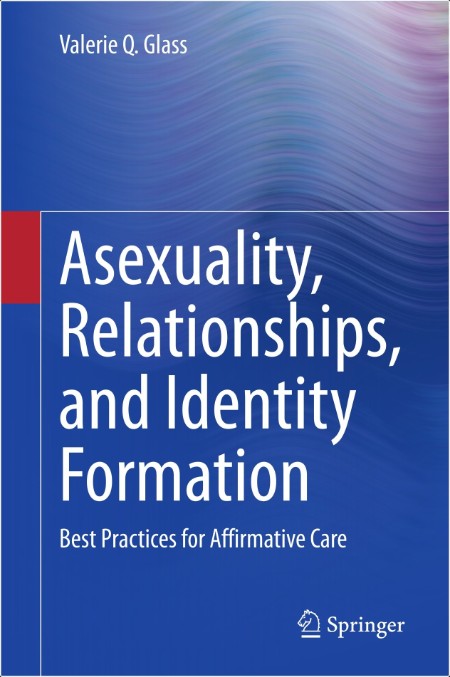
Asexuality, Relationships, and Identity Formation Best Practices for Affirmative Care | 7.94 MB
Title: Asexuality, Relationships, and Identity Formation
Author: Valerie Q. Glass
Category: Nonfiction, Health & Well Being, Psychology, Clinical Psychology, Counselling, Social Psychology
Language: English | 173 Pages | ISBN: 3032228565
Description:
This book highlights the importance of bridging asexuality competency with queer affirmative care practices in helping professions. It provides a foundational background on asexuality to inform clinical practices. Queer affirmative care embraces and celebrates varying sexuality orientations and gender identities; however, asexuality, as a sexual orientation, is less commonly discussed and understood by affirming practitioners. Information provided in this book closes some gaps in knowledge for clinicians. The book guides the reader through the language in asexual experiences and identities, the unique coming out experiences of asexuals, asexual individuals and relationships, and best clinical practices for working with asexual individuals.
The author presents current research on asexuality and qualitative data compiled independently by the author. This focus on research guides readers through voices, examples, and scenarios that amplify asexual experiences. One major finding that is presented in the book is the author's formation of an asexuality coming out model that highlights uniquenesses in the coming out process that many asexuals experience. The author's professional identity is in the field of marriage and family therapy, so special attention and awareness of couple and family contexts are considered throughout the book. Among the topics covered in the book include:
Asexuality, Relationships, and Identity Formation: Best Practices for Affirmative Care provides a background on asexual identities to inform clinical practice. Individuals in clinical helping settings (e.g., couple and family therapy, social work, and counseling) will appreciate the approach presented in this book that considers clinical directions and case examples as a way to best embrace asexual affirmative care. Additionally, those who work professionally in any care setting with queer individuals will gain further information on this increasingly more visible sub-group of queer individuals. Finally, those who work in queer advocacy, policy, or education also may find the book useful for their work.
DOWNLOAD:
https://rapidgator.net/file/cd8762fdd2c037f6f7529372e5741fe9/Asexuality_Relationships_and_Identity_Formation_Best_Practices_for_Affirmative_Care.rar
https://nitroflare.com/view/5AC07D2118D2C53/Asexuality_Relationships_and_Identity_Formation_Best_Practices_for_Affirmative_Care.rar
This book highlights the importance of bridging asexuality competency with queer affirmative care practices in helping professions. It provides a foundational background on asexuality to inform clinical practices. Queer affirmative care embraces and celebrates varying sexuality orientations and gender identities; however, asexuality, as a sexual orientation, is less commonly discussed and understood by affirming practitioners. Information provided in this book closes some gaps in knowledge for clinicians. The book guides the reader through the language in asexual experiences and identities, the unique coming out experiences of asexuals, asexual individuals and relationships, and best clinical practices for working with asexual individuals.
The author presents current research on asexuality and qualitative data compiled independently by the author. This focus on research guides readers through voices, examples, and scenarios that amplify asexual experiences. One major finding that is presented in the book is the author's formation of an asexuality coming out model that highlights uniquenesses in the coming out process that many asexuals experience. The author's professional identity is in the field of marriage and family therapy, so special attention and awareness of couple and family contexts are considered throughout the book. Among the topics covered in the book include:
- Asexuality: History, Background, and Contemporary Issues
- A Focus on Language and the Impact of Socially Constructed Messages
- Asexuality, Intimate Relationships, and Family
- Asexual Affirmative Care
Asexuality, Relationships, and Identity Formation: Best Practices for Affirmative Care provides a background on asexual identities to inform clinical practice. Individuals in clinical helping settings (e.g., couple and family therapy, social work, and counseling) will appreciate the approach presented in this book that considers clinical directions and case examples as a way to best embrace asexual affirmative care. Additionally, those who work professionally in any care setting with queer individuals will gain further information on this increasingly more visible sub-group of queer individuals. Finally, those who work in queer advocacy, policy, or education also may find the book useful for their work.
DOWNLOAD:
https://rapidgator.net/file/cd8762fdd2c037f6f7529372e5741fe9/Asexuality_Relationships_and_Identity_Formation_Best_Practices_for_Affirmative_Care.rar
https://nitroflare.com/view/5AC07D2118D2C53/Asexuality_Relationships_and_Identity_Formation_Best_Practices_for_Affirmative_Care.rar
We need your support!
Make a donation to help us stay online

Bitcoin (BTC)
bc1q08g9d22cxkawsjlf8etuek2pc9n2a3hs4cdrld

Bitcoin Cash (BCH)
qqvwexzhvgauxq2apgc4j0ewvcak6hh6lsnzmvtkem

Ethereum (ETH)
0xb55513D2c91A6e3c497621644ec99e206CDaf239

Litecoin (LTC)
ltc1qt6g2trfv9tjs4qj68sqc4uf0ukvc9jpnsyt59u

USDT (ERC20)
0xb55513D2c91A6e3c497621644ec99e206CDaf239

USDT (TRC20)
TYdPNrz7v1P9riWBWZ317oBgJueheGjATm
Information |
|||
 |
Users of GUESTS are not allowed to comment this publication. | ||