


Before the Scrolls A Material Approach to Israel's Prophetic Library
Category: eBooks
- views: 132
- date: 12 May 2026
- posted by: BeMyLove
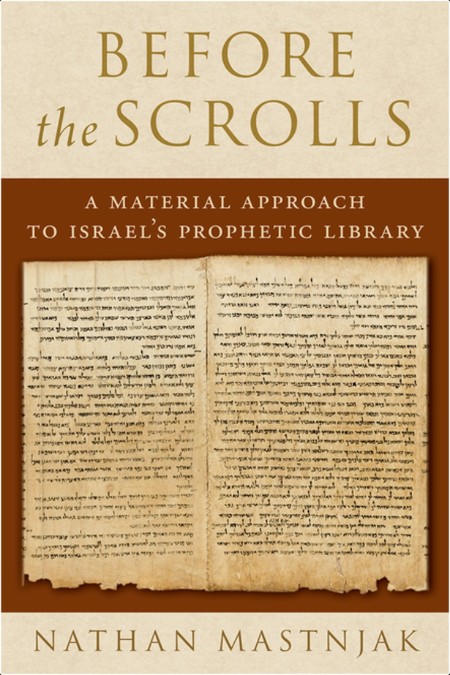
Before the Scrolls A Material Approach to Israel's Prophetic Library | 12.74 MB
Title: Before the Scrolls
Author: Nathan Mastnjak;
Category: Nonfiction, Religion & Spirituality, Bible & Bible Studies, Reference, Bibles, Fiction & Literature, Literary Theory & Criticism
Language: English | 265 Pages | ISBN: 0190911093
Description:
Before the Scrolls traces the media history of the biblical prophetic corpus to propose a material approach to biblical literature. Although scholars understand that the material of composition was the scroll rather than the codex, they persist in imagining the form as a single textual object. This assumption pervades centuries of scholarship and drives many of the questions asked about biblical composition. Nathan Mastnjak raises the question of the original physical format of biblical texts and argues that many of the literary works that would eventually become the Bible's prophetic books were not written initially as books. Isaiah, Jeremiah, and Ezekiel were originally composed on loosely organized collections of multiple short papyrus scrolls and sheets. Though rarely considered in scholarship, the realia of a text's form, format, production, and material substance have a profound influence on the meaning of the text. Unlike works committed to single book-scrolls, these collections did not have predetermined orders of reading and were susceptible to multiple arrangements. Only in the Hellenistic era were these compositions edited, organized, and copied into single volume book-scrolls such as those known from the Dead Sea. By investigating the relationship between form and meaning and the transition from the collection to the book, Mastnjak suggests novel solutions to classic problems in biblical scholarship, such as the relationships between the MT and LXX of Jeremiah and that between First and Second Isaiah. The failure to account for the materiality of the prophetic corpus has led scholarship to occasionally ask the wrong questions of these compositions and has blinded it to the vital role that Hellenistic bookmakers played in the creation of the Bible as we know it. Reconceiving much Judean literature on a collection-model rather than book-model has significant implications for our understanding of how the Bible itself was composed and read.
DOWNLOAD:
https://rapidgator.net/file/d3b5df967480a0cd35d50370d732c69b/Before_the_Scrolls_A_Material_Approach_to_Israels_Prophetic_Library.rar
https://nitroflare.com/view/F90E91CC91606C4/Before_the_Scrolls_A_Material_Approach_to_Israels_Prophetic_Library.rar
We need your support!
Make a donation to help us stay online

Bitcoin (BTC)
bc1q08g9d22cxkawsjlf8etuek2pc9n2a3hs4cdrld

Bitcoin Cash (BCH)
qqvwexzhvgauxq2apgc4j0ewvcak6hh6lsnzmvtkem

Ethereum (ETH)
0xb55513D2c91A6e3c497621644ec99e206CDaf239

Litecoin (LTC)
ltc1qt6g2trfv9tjs4qj68sqc4uf0ukvc9jpnsyt59u

USDT (ERC20)
0xb55513D2c91A6e3c497621644ec99e206CDaf239

USDT (TRC20)
TYdPNrz7v1P9riWBWZ317oBgJueheGjATm
Information |
|||
 |
Users of GUESTS are not allowed to comment this publication. | ||