


Ecotourism and Wildlife Conservation in the Anthropocene
Category: eBooks
- views: 126
- date: 10 March 2026
- posted by: BeMyLove
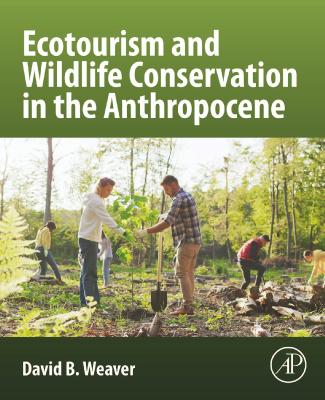
Ecotourism and Wildlife Conservation in the Anthropocene | 6.8 MB
Title: Ecotourism and Wildlife Conservation in the Anthropocene
Author: David B. Weaver;
Category: Nonfiction, Science & Nature, Nature, Environment, Environmental Conservation & Protection, Science, Biological Sciences
Language: English | 328 Pages | ISBN: 0443329966
Description:
Ecotourism and Wildlife Conservation in the Anthropocene innovates by demonstrating ecotourism as an inclusive industry positioned to mobilize all people as agents of wildlife conservation. The Anthropocene and post-1950 "Great Acceleration" of human populations have dramatically altered our planet, and ecotourism is often framed as a niche activity that has limited potential to promote conservation of regional biodiversity. By showing that ecotourism as a sustainable, educational, and nature-focused activity can occur anywhere, the sector can better support the preservation and rehabilitation of diverse environments, networks, and natural communities. Accordingly, Ecotourism and Wildlife Conservation in the Anthropocene presents a cogent argument for a new management paradigm based on broader parameters of engagement. Here, all people are empowered to co-create a better future. Concurrently, the book provides practical advice for achieving this future through the examination of relevant real-world management considerations. For students and young professionals in the wildlife conservation discipline, the book conveys the growing importance of ecotourism as a vehicle for preserving and rehabilitating threatened habitats, flora, and fauna. Frequent case studies focused on Crawford Lake provide a focal point that personifies the parameters and possibilities of ecotourism in the Anthropocene and helps to integrate the comprehensive scope of this book.• Illustrates the linkages between ecotourism, biodiversity, and wildlife conservation • Demonstrates the necessity and practicality of expanding the settings and markets constituting ecotourism • Establishes an inclusive framework for global stakeholder engagement with ecotourism • Empowers local communities, businesses, and ordinary people to co-create and engage in beneficial ecotourism and conservation • Facilitates student learning with clear chapter structure, keyword definitions, discussion boxes, case studies, and chapter review questions
DOWNLOAD:
https://rapidgator.net/file/c71c50542df5f216af824223adecb31e/Ecotourism_and_Wildlife_Conservation_in_the_Anthropocene.pdf
https://nitroflare.com/view/BDD11962322BCAA/Ecotourism_and_Wildlife_Conservation_in_the_Anthropocene.pdf
Ecotourism and Wildlife Conservation in the Anthropocene innovates by demonstrating ecotourism as an inclusive industry positioned to mobilize all people as agents of wildlife conservation. The Anthropocene and post-1950 "Great Acceleration" of human populations have dramatically altered our planet, and ecotourism is often framed as a niche activity that has limited potential to promote conservation of regional biodiversity. By showing that ecotourism as a sustainable, educational, and nature-focused activity can occur anywhere, the sector can better support the preservation and rehabilitation of diverse environments, networks, and natural communities. Accordingly, Ecotourism and Wildlife Conservation in the Anthropocene presents a cogent argument for a new management paradigm based on broader parameters of engagement. Here, all people are empowered to co-create a better future. Concurrently, the book provides practical advice for achieving this future through the examination of relevant real-world management considerations. For students and young professionals in the wildlife conservation discipline, the book conveys the growing importance of ecotourism as a vehicle for preserving and rehabilitating threatened habitats, flora, and fauna. Frequent case studies focused on Crawford Lake provide a focal point that personifies the parameters and possibilities of ecotourism in the Anthropocene and helps to integrate the comprehensive scope of this book.• Illustrates the linkages between ecotourism, biodiversity, and wildlife conservation • Demonstrates the necessity and practicality of expanding the settings and markets constituting ecotourism • Establishes an inclusive framework for global stakeholder engagement with ecotourism • Empowers local communities, businesses, and ordinary people to co-create and engage in beneficial ecotourism and conservation • Facilitates student learning with clear chapter structure, keyword definitions, discussion boxes, case studies, and chapter review questions
DOWNLOAD:
https://rapidgator.net/file/c71c50542df5f216af824223adecb31e/Ecotourism_and_Wildlife_Conservation_in_the_Anthropocene.pdf
https://nitroflare.com/view/BDD11962322BCAA/Ecotourism_and_Wildlife_Conservation_in_the_Anthropocene.pdf
We need your support!
Make a donation to help us stay online

Bitcoin (BTC)
bc1q08g9d22cxkawsjlf8etuek2pc9n2a3hs4cdrld

Bitcoin Cash (BCH)
qqvwexzhvgauxq2apgc4j0ewvcak6hh6lsnzmvtkem

Ethereum (ETH)
0xb55513D2c91A6e3c497621644ec99e206CDaf239

Litecoin (LTC)
ltc1qt6g2trfv9tjs4qj68sqc4uf0ukvc9jpnsyt59u

USDT (ERC20)
0xb55513D2c91A6e3c497621644ec99e206CDaf239

USDT (TRC20)
TYdPNrz7v1P9riWBWZ317oBgJueheGjATm
Information |
|||
 |
Users of GUESTS are not allowed to comment this publication. | ||