


[history] Habit Forming Drug Addiction in America, 1776-1914 by Elizabeth Kelly Gray
Category: eBooks
- views: 74
- date: 21 December 2024
- posted by: BeMyLove
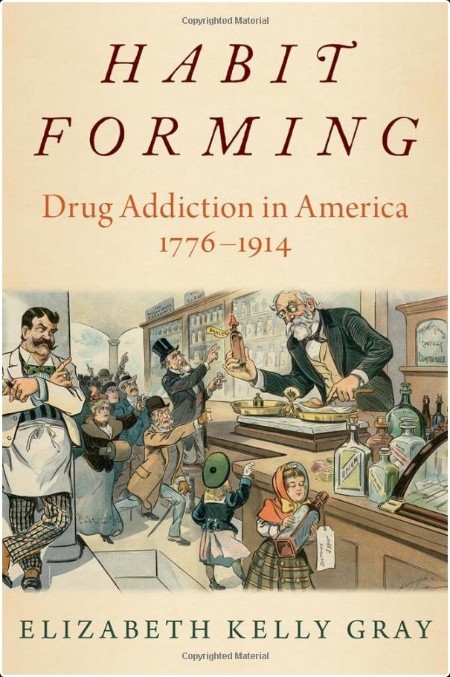
[history] Habit Forming Drug Addiction in America, 1776-1914 by Elizabeth Kelly Gray | 6.64 MB
Title: Habit Forming: Drug Addiction in America, 1776-1914
Author: Elizabeth Kelly Gray
Description:
Habitual drug use in the United States is at least as old as the nation itself. Habit Forming traces the history of unregulated drug use and dependency before 1914, when the Harrison Narcotic Tax Act limited sales of opiates and cocaine under US law. Many Americans used opiates and other drugs medically and became addicted. Some tried Hasheesh Candy, injected morphine, or visited opium dens, but neither use nor addiction was linked to crime, due to the dearth of restrictive laws. After the Civil War, American presses published extensively about domestic addiction. Later in the nineteenth century, many used cocaine and heroin as medicine. As addiction became a major public health issue, commentators typically sympathized with white, middle-class drug users, while criticizing such use by poor or working-class people and people of color. When habituation was associated with middle-class morphine users, few advocated for restricted drug access. By the 1910s, as use was increasinglyassociated with poor young men, support for regulations increased. In outlawing users' access to habit-forming drugs at the national level, a public health problem became a larger legal and social problem, one with an enduring influence on American drug laws and their enforcement.
DOWNLOAD:
https://rapidgator.net/file/fb3ea162ff9ffa9bfde10aa179eebfb2/history_Habit_Forming__Drug_Addiction_in_America_1776-1914_by_Elizabeth_Kelly_Gray_.rar
https://ddownload.com/ldw6bgiqbhwg/history_Habit_Forming__Drug_Addiction_in_America_1776-1914_by_Elizabeth_Kelly_Gray_.rar
We need your support!
Make a donation to help us stay online

Bitcoin (BTC)
bc1q08g9d22cxkawsjlf8etuek2pc9n2a3hs4cdrld

Bitcoin Cash (BCH)
qqvwexzhvgauxq2apgc4j0ewvcak6hh6lsnzmvtkem

Ethereum (ETH)
0xb55513D2c91A6e3c497621644ec99e206CDaf239

Litecoin (LTC)
ltc1qt6g2trfv9tjs4qj68sqc4uf0ukvc9jpnsyt59u

USDT (ERC20)
0xb55513D2c91A6e3c497621644ec99e206CDaf239

USDT (TRC20)
TYdPNrz7v1P9riWBWZ317oBgJueheGjATm
Information |
|||
 |
Users of GUESTS are not allowed to comment this publication. | ||