


Migrant Aesthetics by Glenda R. Carpio
Category: eBooks
- views: 107
- date: 4 March 2024
- posted by: AD-TEAM
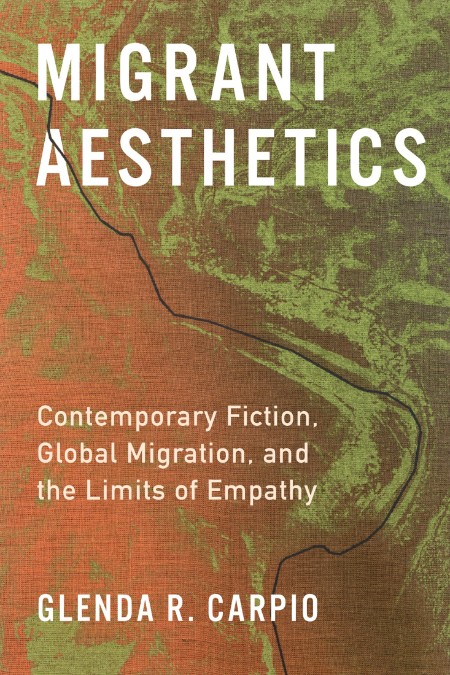
epub | 4.22 MB | English | | Author: Glenda R. Carpio | Year: 2023
Description:
By most accounts, immigrant literature deals primarily with how immigrants struggle to adapt to their adopted countries. Its readers have come to expect stories of identity formation, of how immigrants create ethnic communities and maintain ties to countries of origin. Yet such narratives can center exceptional stories of individual success or obscure the political forces that uproot millions of people the world over.
Glenda R. Carpio argues that we need a new paradigm for migrant fiction. Migrant Aesthetics shows how contemporary authors—Teju Cole, Dinaw Mengestu, Aleksandar Hemon, Valeria Luiselli, Julie Otsuka, and Junot Díaz—expose the historical legacies and political injustices that produce forced migration through artistic innovation. Their fiction rejects the generic features of immigrant literature—especially the acculturation plot and the use of migrant narrators as cultural guides who must appeal to readerly empathy. They emphasize the limits of empathy, insisting instead that readers recognize their own roles in the realities of migration, which, like climate change, is driven by global inequalities. Carpio traces how these authors create literary echoes of the past, showing how the history of (neo)colonialism links distinct immigrant experiences and can lay the foundation for cross-ethnic migrant solidarity. Revealing how migration shapes and is shaped by language and narrative, Migrant Aesthetics casts fiction as vital testimony to past and present colonial, imperial, and structural displacement and violence.
Glenda R. Carpio argues that we need a new paradigm for migrant fiction. Migrant Aesthetics shows how contemporary authors—Teju Cole, Dinaw Mengestu, Aleksandar Hemon, Valeria Luiselli, Julie Otsuka, and Junot Díaz—expose the historical legacies and political injustices that produce forced migration through artistic innovation. Their fiction rejects the generic features of immigrant literature—especially the acculturation plot and the use of migrant narrators as cultural guides who must appeal to readerly empathy. They emphasize the limits of empathy, insisting instead that readers recognize their own roles in the realities of migration, which, like climate change, is driven by global inequalities. Carpio traces how these authors create literary echoes of the past, showing how the history of (neo)colonialism links distinct immigrant experiences and can lay the foundation for cross-ethnic migrant solidarity. Revealing how migration shapes and is shaped by language and narrative, Migrant Aesthetics casts fiction as vital testimony to past and present colonial, imperial, and structural displacement and violence.



We need your support!
Make a donation to help us stay online

Bitcoin (BTC)
bc1q08g9d22cxkawsjlf8etuek2pc9n2a3hs4cdrld

Bitcoin Cash (BCH)
qqvwexzhvgauxq2apgc4j0ewvcak6hh6lsnzmvtkem

Ethereum (ETH)
0xb55513D2c91A6e3c497621644ec99e206CDaf239

Litecoin (LTC)
ltc1qt6g2trfv9tjs4qj68sqc4uf0ukvc9jpnsyt59u

USDT (ERC20)
0xb55513D2c91A6e3c497621644ec99e206CDaf239

USDT (TRC20)
TYdPNrz7v1P9riWBWZ317oBgJueheGjATm
Information |
|||
 |
Users of GUESTS are not allowed to comment this publication. | ||