


The Survivors of the Clotilda by Hannah Durkin
Category: eBooks
- views: 93
- date: 31 January 2024
- posted by: AD-TEAM
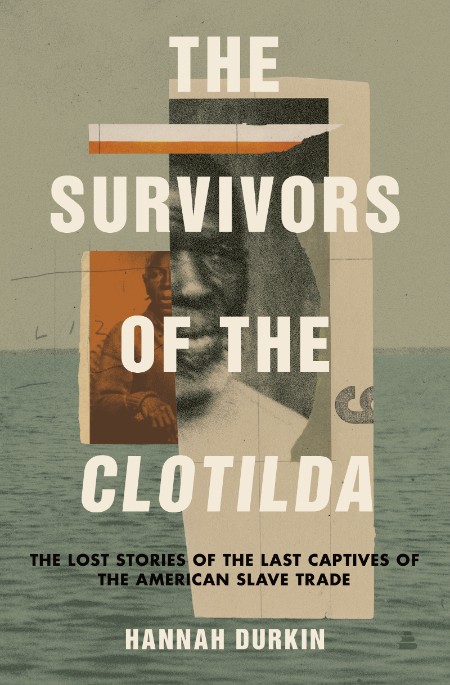
epub | 18.51 MB | English | Isbn:9780063072992 | Author: Hannah Durkin | Year: 2024
Description:
Joining the ranks of Rebecca Skloot's The Immortal Life of Henrietta Lacks and Zora Neale Hurston's rediscovered classic Barracoon, an immersive and revelatory history of the Clotilda, the last slave ship to land on US soil, told through the stories of its survivors—the last documented survivors of any slave ship—whose lives diverged and intersected in profound ways.
The Clotilda, the last slave ship to land on American soil, docked in Mobile Bay, Alabama, in July 1860—more than half a century after the passage of a federal law banning the importation of captive Africans, and nine months before the beginning of the Civil War. The last of its survivors lived well into the twentieth century. They were the last witnesses to the final act of a terrible and significant period in world history.
In this epic work, Dr. Hannah Durkin tells the stories of the Clotilda's 110 captives, drawing on her intensive archival, historical, and sociological research. The Survivors of the Clotilda follows their lives from their kidnappings in what is modern-day Nigeria through a terrifying 45-day journey across the Middle Passage; from the subsequent sale of the ship's 103 surviving children and young people into slavery across Alabama to the dawn of the Civil Rights movement in Selma; from the foundation of an all-Black African Town (later Africatown) in Northern Mobile—an inspiration for writers of the Harlem Renaissance, including Zora Neale Hurston—to the foundation of the quilting community of Gee's Bend—a Black artistic circle whose cultural influence remains enormous.
An astonishing, deeply compelling tapestry of history, biography, and social commentary, The Survivors of the Clotilda is a tour de force that deepens our knowledge and understanding of the Black experience and of America and its tragic past.
The Survivors of the Clotilda includes 30 artworks and photographs.



We need your support!
Make a donation to help us stay online

Bitcoin (BTC)
bc1q08g9d22cxkawsjlf8etuek2pc9n2a3hs4cdrld

Bitcoin Cash (BCH)
qqvwexzhvgauxq2apgc4j0ewvcak6hh6lsnzmvtkem

Ethereum (ETH)
0xb55513D2c91A6e3c497621644ec99e206CDaf239

Litecoin (LTC)
ltc1qt6g2trfv9tjs4qj68sqc4uf0ukvc9jpnsyt59u

USDT (ERC20)
0xb55513D2c91A6e3c497621644ec99e206CDaf239

USDT (TRC20)
TYdPNrz7v1P9riWBWZ317oBgJueheGjATm
Information |
|||
 |
Users of GUESTS are not allowed to comment this publication. | ||