


China's Good War by Rana Mitter
Category: eBooks
- views: 75
- date: 18 November 2023
- posted by: AD-TEAM
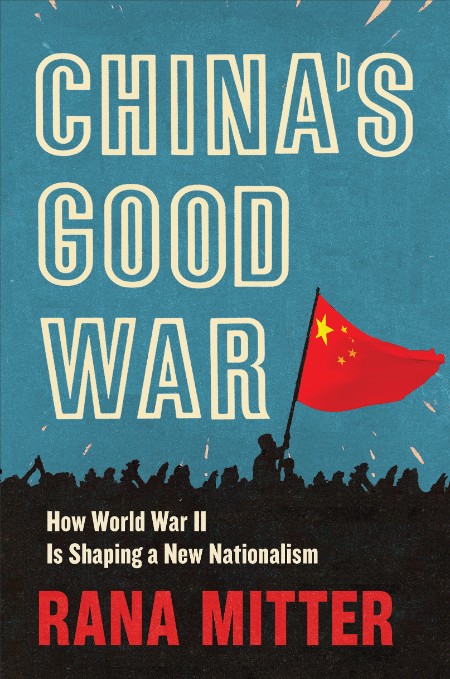
epub | 4.27 MB | English | Isbn:9781799939450 | Author: Rana Mitter | Year: 2020
Description:
Chinese leaders once tried to suppress memories of their nation's brutal experience during World War II. Now they celebrate the "victory"—a key foundation of China's rising nationalism.
For most of its history, the People's Republic of China limited public discussion of the war against Japan. It was an experience of victimization—and one that saw Mao Zedong and Chiang Kai-shek fighting for the same goals. But now, as China grows more powerful, the meaning of the war is changing. Rana Mitter argues that China's reassessment of the World War II years is central to its newfound confidence abroad and to mounting nationalism at home.
China's Good War begins with the academics who shepherded the once-taboo subject into wider discourse. Encouraged by reforms under Deng Xiaoping, they researched the Guomindang war effort, collaboration with the Japanese, and China's role in forming the post-1945 global order. But interest in the war would not stay confined to scholarly journals. Today public sites of memory—including museums, movies and television shows, street art, popular writing, and social media—define the war as a founding myth for an ascendant China. Wartime China emerges as victor rather than victim.
The shifting story has nurtured a number of new views. One rehabilitates Chiang Kai-shek's war efforts, minimizing the bloody conflicts between him and Mao and aiming to heal the wounds of the Cultural Revolution. Another narrative positions Beijing as creator and protector of the international order that emerged from the war—an order, China argues, under threat today largely from the United States. China's radical reassessment of its collective memory of the war has created a new foundation for a people destined to shape the world.


We need your support!
Make a donation to help us stay online

Bitcoin (BTC)
bc1q08g9d22cxkawsjlf8etuek2pc9n2a3hs4cdrld

Bitcoin Cash (BCH)
qqvwexzhvgauxq2apgc4j0ewvcak6hh6lsnzmvtkem

Ethereum (ETH)
0xb55513D2c91A6e3c497621644ec99e206CDaf239

Litecoin (LTC)
ltc1qt6g2trfv9tjs4qj68sqc4uf0ukvc9jpnsyt59u

USDT (ERC20)
0xb55513D2c91A6e3c497621644ec99e206CDaf239

USDT (TRC20)
TYdPNrz7v1P9riWBWZ317oBgJueheGjATm
Information |
|||
 |
Users of GUESTS are not allowed to comment this publication. | ||