


Mathematics and Scientific Representation (Oxford Studies in Philosophy of Science)
Category: eBooks
- views: 114
- date: 15 May 2023
- posted by: AD-TEAM
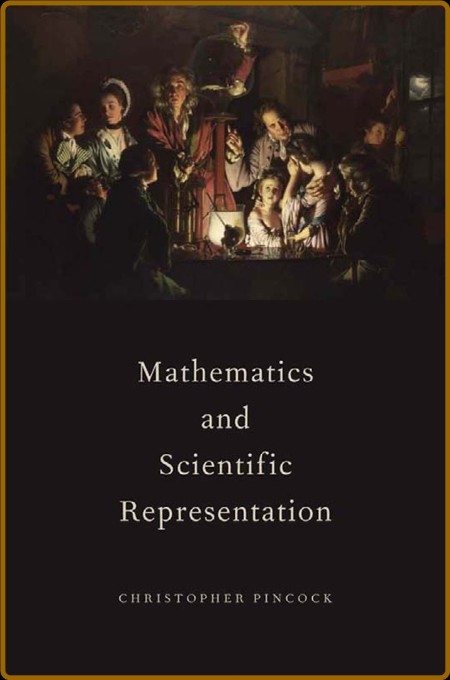
pdf | 1.82 MB | English | Isbn: 978-0190201395 | Author: Pincock, Christopher. | Year: 2014
Description:
Mathematics plays a central role in much of contemporary science, but philosophers have struggled to understand what this role is or how significant it might be for mathematics and science. In this book Christopher Pincock tackles this perennial question in a new way by asking how mathematics contributes to the success of our best scientific representations. In the first part of the book this question is posed and sharpened using a proposal for how we can determine the content of a scientific representation. Several different sorts of contributions from mathematics are then articulated. Pincock argues that each contribution can be understood as broadly epistemic, so that what mathematics ultimately contributes to science is best connected with our scientific knowledge.
In the second part of the book, Pincock critically evaluates alternative approaches to the role of mathematics in science. These include the potential benefits for scientific discovery and scientific explanation. A major focus of this part of the book is the indispensability argument for mathematical platonism. Using the results of part one, Pincock argues that this argument can at best support a weak form of realism about the truth-value of the statements of mathematics. The book concludes with a chapter on pure mathematics and the remaining options for making sense of its interpretation and epistemology.
Thoroughly grounded in case studies drawn from scientific practice, this book aims to bring together current debates in both the philosophy of mathematics and the philosophy of science and to demonstrate the philosophical importance of applications of mathematics.
Category:Logic, Mathematics History, Philosophy of Logic & Language

We need your support!
Make a donation to help us stay online

Bitcoin (BTC)
bc1q08g9d22cxkawsjlf8etuek2pc9n2a3hs4cdrld

Bitcoin Cash (BCH)
qqvwexzhvgauxq2apgc4j0ewvcak6hh6lsnzmvtkem

Ethereum (ETH)
0xb55513D2c91A6e3c497621644ec99e206CDaf239

Litecoin (LTC)
ltc1qt6g2trfv9tjs4qj68sqc4uf0ukvc9jpnsyt59u

USDT (ERC20)
0xb55513D2c91A6e3c497621644ec99e206CDaf239

USDT (TRC20)
TYdPNrz7v1P9riWBWZ317oBgJueheGjATm
Information |
|||
 |
Users of GUESTS are not allowed to comment this publication. | ||