


Liberalism and the Philosophy of Economics
Category: eBooks
- views: 220
- date: 12 July 2022
- posted by: AD-TEAM
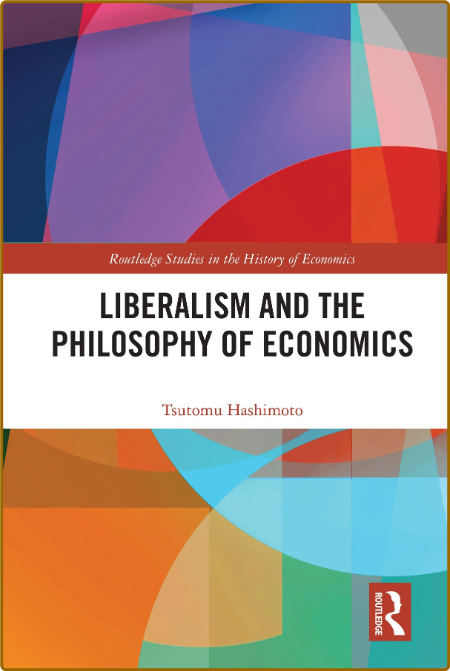
pdf | 1.58 MB | English | Isbn:‎ B08PQKCMSZ | Author: Tsutomu Hashimoto | Year: 2020
Description:
The book shows the ideological underpinning of the economist's work, and the ideological perspectives are those that have largely prevailed in the last couple of centuries: liberalism, nationalism and socialism. It is on the ground and strength of these ideologies that systems of political economy have been built. Roselli explores the connections between theory and value judgements to identify the philosophical premises behind the economic reasoning of economists as diverse as Smith, Ricardo, Marx, Pareto, Keynes, Hayek, among others.
Liberalism originally leaned towards an unhindered laissez-faire, then towards a wider role of the State in the economic system, under the influence of socialist ideology, then again it has relied on an individualistic approach to issues of wealth production and distribution; more recently the unrealiability of this approach has been revealed by systemic crises, suggesting new reflections and uncertainties about the coherence of economic reasoning with the liberal idea: an institutional and historical perspective may open new spaces to the understanding of a liberal and capitalistic economy.
The vicissitudes of economic nationalism, its statist and protectionist features, its decline and recent resurgence are examined, being unclear what shape it is currently taking from an economic and political viewpoint. This is particularly obscure in the case of that specific form of nationalism called populism.
The decline and fall of Marx's historical materialism cannot hide the inherent contrast of interest between the two sides of a labour contract. The lasting legacy of socialism is the enduring and multiform relevance – from a cowed labour force to environmental issues - of social themes in modern economies.
Category:Economic Theory, Social Philosophy, Political Philosophy
We need your support!
Make a donation to help us stay online

Bitcoin (BTC)
bc1q08g9d22cxkawsjlf8etuek2pc9n2a3hs4cdrld

Bitcoin Cash (BCH)
qqvwexzhvgauxq2apgc4j0ewvcak6hh6lsnzmvtkem

Ethereum (ETH)
0xb55513D2c91A6e3c497621644ec99e206CDaf239

Litecoin (LTC)
ltc1qt6g2trfv9tjs4qj68sqc4uf0ukvc9jpnsyt59u

USDT (ERC20)
0xb55513D2c91A6e3c497621644ec99e206CDaf239

USDT (TRC20)
TYdPNrz7v1P9riWBWZ317oBgJueheGjATm
Information |
|||
 |
Users of GUESTS are not allowed to comment this publication. | ||