Deep Learning: GANs and Variational Autoencoders
Date: 2 February 2026 | Posted by: AD-TEAM
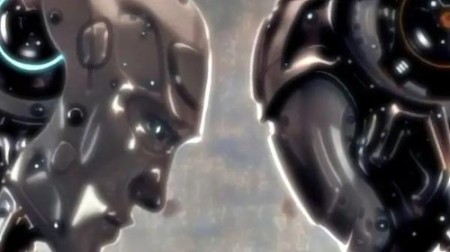
Deep Learning: GANs and Variational Autoencoders
MP4 | Video: 1280x720 | Duration: 7 Hours | 500 MB
Author: Lazy Programmer Inc. | Language: English | Skill level: Intermediate
Variational autoencoders and GANs have been 2 of the most interesting developments in deep learning and machine learning recently.
Yann LeCun, a deep learning pioneer, has said that the most important development in recent years has been adversarial training, referring to GANs.
GAN stands for generative adversarial network, where 2 neural networks compete with each other.
What is unsupervised learning?
Unsupervised learning means we're not trying to map input data to targets, we're just trying to learn the structure of that input data.
Once we've learned that structure, we can do some pretty cool things.
One example is generating poetry - we've done examples of this in the past.
But poetry is a very specific thing, how about writing in general?
If we can learn the structure of language, we can generate any kind of text. In fact, big companies are putting in lots of money to research how the news can be written by machines.
But what if we go back to poetry and take away the words?
Well then we get art, in general.
By learning the structure of art, we can create more art.
How about art as sound?
If we learn the structure of music, we can create new music.
Imagine the top 40 hits you hear on the radio are songs written by robots rather than humans.
The possibilities are endless!
You might be wondering, "how is this course different from the first unsupervised deep learning course?"
In this first course, we still tried to learn the structure of data, but the reasons were different.
We wanted to learn the structure of data in order to improve supervised training, which we demonstrated was possible.
In this new course, we want to learn the structure of data in order to produce more stuff that resembles the original data.
This by itself is really cool, but we'll also be incorporating ideas from Bayesian Machine Learning, Reinforcement Learning, and Game Theory.
Requirements:
Calculus
Probability
Object-oriented programming
Python coding: if/else, loops, lists, dicts, sets
Numpy coding: matrix and vector operations
Linear regression
Gradient descent
Know how to build a feedforward and convolutional neural network in Theano and TensorFlow
| My collection books | Best Sellers books | My video posts

DDownload
https://ddownload.com/74jn9j6zogq1/.deep.learning.gans.and.variational.autoencoders.10.2018.part1.rar
https://ddownload.com/n05rgqs3ao3q/.deep.learning.gans.and.variational.autoencoders.10.2018.part2.rar
RapidGator
https://rapidgator.net/file/38f49fe3cbf41d401e8ee8e85408f6c5/.deep.learning.gans.and.variational.autoencoders.10.2018.part1.rar
https://rapidgator.net/file/e71a28599819cb2d20f09db5a6dd37a0/.deep.learning.gans.and.variational.autoencoders.10.2018.part2.rar
NitroFlare
https://nitroflare.com/view/A7808A8DEAB5ADF/.deep.learning.gans.and.variational.autoencoders.10.2018.part1.rar
https://nitroflare.com/view/4229797E8CADEDB/.deep.learning.gans.and.variational.autoencoders.10.2018.part2.rar
See full article