Theory Of Computation: Automata Theory
Date: 9 March 2025 | Posted by: AD-TEAM
Theory Of Computation: Automata Theory
Published 2/2025
MP4 | Video: h264, 1920x1080 | Audio: AAC, 44.1 KHz
Language: English | Size: 731.65 MB | Duration: 2h 42m
Formal Language Foundations, Computational Complexity focus, Automata and Languages, Turing Machine and more.
What you'll learn
Deep understanding of how computer machines work based on a given design and what are the limitations of them.
this course helps in developing strong problem solving skills, including analytical thinking, logical reasoning, and mathematical modeling.
Understanding how parse and analyze code is crucial for building compilers.
Till the end of the course you will be mastered in the topics like Finite Automata, DFA, NFA, Moore & Mealy machine, Turing machine and many more.
Requirements
Just the basic knowledge of Computers and its working and you are ready to take the course.
Description
This course explores the fundamental principles of computation, including formal languages, automata theory, computability, and complexity theory. Students will study finite automata, regular languages, context-free grammars, Turing machines, and the Church-Turing thesis. The course also introduces decidability and undecidability, computational complexity classes (P, NP, NP-complete), and reductions. Emphasis is placed on developing rigorous problem-solving skills and understanding the theoretical limits of computation.This course provides an in-depth study of abstract computing devices, including finite automata, pushdown automata, and Turing machines. Topics include regular languages, formal grammars, nondeterminism, and the Chomsky hierarchy. Students will explore the mathematical foundations of computation, analyze the power and limitations of different computational models, and apply automata theory to practical areas such as compiler design and pattern matching. The course emphasizes formal proofs, problem-solving techniques, and theoretical analysis of automata and formal languages.By the end of this course, you will develop strong logical thinking skills, enabling you to analyze problems rigorously, construct formal proofs, and reason about computational models systematically. You will learn to break down complex problems into structured components, recognize patterns in formal languages, and apply mathematical logic to verify the correctness of computational processes. These skills will enhance your ability to approach problem-solving with precision and clarity in both theoretical and practical computing contexts.
Overview
Section 1: Introduction
Lecture 1 Introduction
Lecture 2 Course Overview
Lecture 3 What is Language
Lecture 4 Automata
Lecture 5 Grammar in TOC
Lecture 6 Powers of Sigma and Sets
Lecture 7 Deterministic Finite Automata
Lecture 8 DFA Example 1
Lecture 9 DFA Example 2
Lecture 10 DFA Example 3
Lecture 11 Non Deterministic Finite Automata
Lecture 12 NFA Example
Lecture 13 Difference between DFA and NFA
Lecture 14 Conversion of NFA to DFA
Lecture 15 Limitations of Finite State Automata
Lecture 16 Moore Machine
Lecture 17 Mealy Machine
Lecture 18 Difference between Moore and Mealy Machine
Lecture 19 Conversion of Moore to Mealy Machine
Lecture 20 Conversion of Mealy to Moore Machine
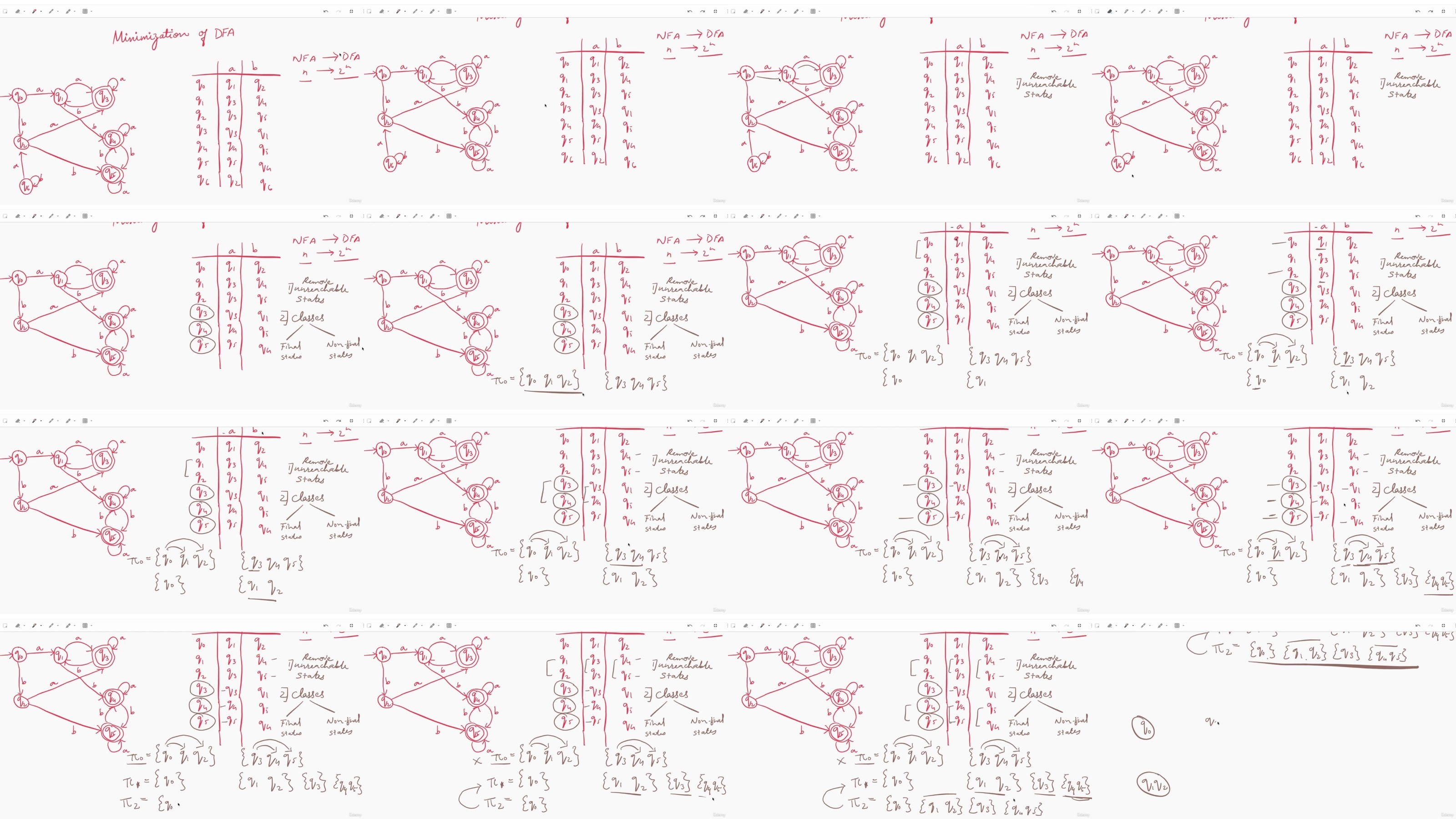
Lecture 21 Minimization of DFA
Lecture 22 What is Regular Expression
Lecture 23 Regular Expression for Finite languages
Lecture 24 Regular Expression for Infinite languages
Lecture 25 Pumping Lemma Theorem
Lecture 26 Push Down Automata
Lecture 27 Turing Machine
Lecture 28 Linear Bounded Automata
Lecture 29 Chomsky Classification
Lecture 30 Mathematical Induction
Beginners who are developing a computer model, all the undergraduates pursuing Computer Science, electrical and CS engineering, and GATE students.,Basic knowledge of discrete mathematics and formal logic is recommended.
TurboBit
RapidGator
AlfaFile
FileFactory
See full article