Asystole : Introduction Causes Symptoms & Management
Date: 11 November 2023 | Posted by: oaxino
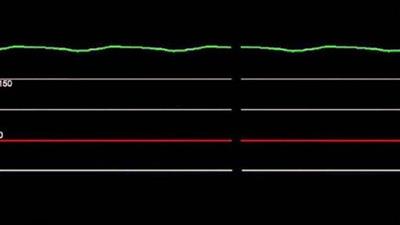
Asystole : Introduction Causes Symptoms & Management
Published 11/2023
MP4 | Video: h264, 1920x1080 | Audio: AAC, 44.1 KHz
Language: English | Size: 582.06 MB | Duration: 0h 51m
Asystole : Introduction causes symptoms & Management
Published 11/2023
MP4 | Video: h264, 1920x1080 | Audio: AAC, 44.1 KHz
Language: English | Size: 582.06 MB | Duration: 0h 51m
Asystole : Introduction causes symptoms & Management
What you'll learn
Asystole : Definition
Asystole : Causes
Asystole : Clinical Features
Asystole :Management
Requirements
Basic Medical Knowledge
Description
What is asystole?Asystole is when your heart's electrical system fails entirely, which causes your heart to stop pumping. It is also known as "flat-line" or "flat-lining" because of how your heart's electrical activity appears as a flat line on an electrocardiogram.Asystole is a type of cardiac arrest, which is when your heart stops beating entirely. This usually makes you pass out. It's also likely that you'll stop breathing or that you'll only have gasping breaths. Without immediate CPR or medical care, this condition is deadly within minutes.Why is asystole called flat-line?Asystole is a clinical sign rather than a symptom because you can't see or feel it without special equipment. The only way to "see" asystole is by using an electrocardiogram (often abbreviated as ECG or EKG). This is a diagnostic test that involves several (usually 12) sensors attached to the skin of your chest. Those sensors, called electrodes, detect your heart's electrical activity and show it as a wave pattern on either a printout or a screen display.As an electrical current travels through your heart with each heartbeat, an EKG's waves show the strength of that current and how it moves through your heart. There's no electrical activity to create the wave with asystole, so it appears as a flat line.How does asystole work?Every time your heart beats, it does so in two steps: systole (sis-toe-lee) and diastole (dye-ast-oh-lee).Systole: Each heartbeat happens because your heart generates a small electrical current, which then moves through your heart. That current is necessary because as it travels, it triggers a squeezing action — systole — in each section of heart muscle.Diastole: This is when your heart muscle relaxes between beats. The relaxed muscle lets your heart's chambers expand and fill up with blood, and your heart will pump out that blood during the next heartbeat.When asystole happens, your heart's electrical system has no detectable activity at all. Without electrical current, your heart stops pumping entirely, and you go into cardiac arrest. When you go into cardiac arrest, this is a state known as "clinical death."
Overview
Section 1: Introduction
Lecture 1 Introduction
Section 2: Electrical System of the Heart
Lecture 2 Electrical System of the Heart
Section 3: Mechanism of Asystole
Lecture 3 Mechanism of Asystole
Section 4: Difference between Asystole and PEA/ Pulseless Electrical Activity
Lecture 4 Difference between Asystole and PEA/ Pulseless Electrical Activity
Section 5: Causes of Asystole
Lecture 5 Causes of Asystole
Section 6: Management of Asystole
Lecture 6 Management of Asystole
Medical Students , Allied Medicine General Public
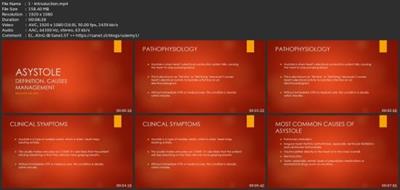
Screenshots
Download link
rapidgator.net:
uploadgig.com:
ddownload.com:
See full article