Corporate Fraud Regulations & Control
Date: 24 October 2023 | Posted by: mitsumi

Corporate Fraud Regulations & Control
Published 10/2023
MP4 | Video: h264, 1920x1080 | Audio: AAC, 44.1 KHz
Language: English | Size: 658.28 MB | Duration: 2h 3m
Learn the key aspects about corporate fraud regulations and also understand how ratios can be used in fraud control
Published 10/2023
MP4 | Video: h264, 1920x1080 | Audio: AAC, 44.1 KHz
Language: English | Size: 658.28 MB | Duration: 2h 3m
Learn the key aspects about corporate fraud regulations and also understand how ratios can be used in fraud control
What you'll learn
The Fraud Triangle
Examples of Corporate Fraud
COSO Framework
Fraud Prevention Controls
Fraud Detection Controls
Requirements
Basic terminologies associated with banks
Description
Through this tutorial we are going to learn the key aspects about corporate fraud regulations and also understand how ratios can be used in fraud control.The training will include the following;IntroductionThe Fraud TriangleExamples of Corporate FraudRegulationsSOX ActCOSO FrameworkFraud Prevention ControlsFraud Detection ControlsFraud can happen in a business of any size, but small businesses are often targets of fraud. According to the American Institute of Certified Public Accountants, small and midsize companies suffer more losses due to fraud than their larger counterparts. Experts estimate that companies lose 5% to 6% of their annual revenue to fraud, so every company should have a comprehensive fraud prevention program. A fraud prevention program is not difficult to implement. It simply consists of education, investigation, and proactive prevention policies. Since employees are the most likely to report issues or any fraudulent activities, you certainly want to give them both the knowledge and the tools to help your company weed out any instances that may be taking place. And while fraud prevention efforts are designed to stop employee fraud, note that any investigations of suspected instances of fraud or employee theft may also act as a deterrent to other employees who may be either committing or contemplating fraud. The bulk of your company's fraud prevention efforts should be focused on the creation and implementation of proactive preventive techniques. This includes establishing internal controls and putting into place policies and procedures that are specifically designed to prevent fraud. One of the best ways to develop prevention policies may include utilizing an experienced anti-fraud professional. Make sure to find one who is experienced and has investigated numerous instances in order to help you to develop the most relevant and most effective anti-fraud controls.
Overview
Section 1: Introduction
Lecture 1 Introduction to Fraud Control
Section 2: Fraud Triangle and Examples of Frauds
Lecture 2 The Fraud Triangle
Lecture 3 Examples of Frauds
Lecture 4 Examples of Frauds Continues
Section 3: Regulations and Prevention Controls
Lecture 5 Regulations of Fraud Control
Lecture 6 Fraud Prevention Controls
Lecture 7 More on Fraud Prevention Controls
Section 4: Detection Controls
Lecture 8 Fraud Detection Control
Lecture 9 Example of Fraud Detection Control
Section 5: Financial Statement Analysis
Lecture 10 Financial Statement Analysis in Fraud Control
Lecture 11 Financial Statement Analysis in Fraud Control Continues
Section 6: Ratio Analysis
Lecture 12 Types of Ratio Analysis in Fraud Control
Lecture 13 more on Ratio Analysis
Section 7: Forensics and Fraud Response
Lecture 14 Forensics in Fraud Detection Control
Lecture 15 Fraud Response
Section 8: Conclusion
Lecture 16 Conclusion of Fraud Controls
Bankers, Accountants, Stakeholders of a company, Anyone who wants to learn about fraud control
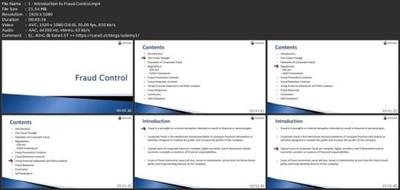
Screenshots
Download link
rapidgator.net:
uploadgig.com:
nitroflare.com:
See full article