Complete Electrical Sub Station Guide
Date: 9 September 2023 | Posted by: voska89
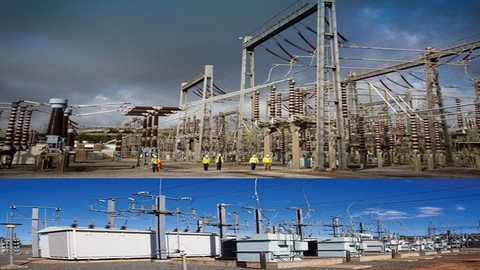
Free Download Complete Electrical Sub Station Guide
Published 9/2023
MP4 | Video: h264, 1280x720 | Audio: AAC, 44.1 KHz
Language: English | Size: 714.72 MB | Duration: 1h 30m
A Complete Handbook for Electrical Substation Engineers
What you'll learn
Substation Overview
Transformers
Power Transmission
System Protection
Principles of System Operation
Requirements
Basic Electrical Knowledge
Description
Are you ready to embark on a journey through the critical infrastructure that powers our modern world? Welcome to the "Comprehensive Guide to Electrical Substations." This course is your gateway to understanding the heart of electrical distribution systems, from the fundamentals to advanced concepts. Whether you're an aspiring electrical engineer, a seasoned professional, or simply curious about the inner workings of substations, this course is designed to equip you with the knowledge and skills necessary to navigate this complex and essential domain.Course Highlights:1.Purpose of Substations: Substations serve as vital hubs in electrical power distribution systems. Their primary purpose is to transform and regulate voltage levels to ensure safe and efficient electricity transmission. Substations also play a crucial role in distributing power to various consumers and industries, maintaining grid stability, and facilitating fault detection and isolation.2. Substation Equipment: Substation equipment includes a wide range of devices and components necessary for the operation of electrical substations. This equipment may encompass transformers, circuit breakers, switches, busbars, insulators, lightning arresters, and various protective devices. Each component serves a specific function in the substation's overall operation and safety.3. Substation Control House: The substation control house, often referred to as the control building or control room, is a vital structure within a substation. It houses the monitoring and control systems that operators use to manage and oversee the substation's functions. The control house provides a controlled environment, typically equipped with computers, displays, communication equipment, and control panels, where operators can make real-time decisions to ensure the reliability and safety of the electrical grid.4. Substation Bus Configurations: Substation bus configurations refer to the arrangement of electrical conductors, such as busbars, within the substation. These configurations determine how electrical power is distributed to different parts of the substation and ultimately to consumers. Common bus configurations include single bus, double bus, ring bus, and breaker-and-a-half arrangements. The choice of bus configuration depends on factors like redundancy, reliability, and operational flexibility.Best of Luck!
Overview
Section 1: Introduction
Lecture 1 Introduction
Section 2: Overview
Lecture 2 Purpose of Sub Station
Lecture 3 sub station equipment & Introduction to switch gear
Section 3: Switch Gear
Lecture 4 Circuit Breakers
Lecture 5 Rating and operation Considerations
Lecture 6 Load Brea Switches
Lecture 7 Disconnect Switches
Section 4: Capacitors and Reactors
Lecture 8 Capacitors
Lecture 9 Reactors
Section 5: Synchronous Condenser, Lightning Arresters and Wave Traps
Lecture 10 Synchronous Condenser
Lecture 11 Lightning Arresters
Lecture 12 Wave Traps
Section 6: Sub Station Control House
Lecture 13 Sub Station Control House
Section 7: Substation Bus Configurations
Lecture 14 Substation Bus Configurations
Electrical Engineers,Mechanical Engineers,Those who want to interest learn Sub Station,Electrical Technicians
Homepage
https://www.udemy.com/course/complete-electrical-sub-station-guide/DOWNLOAD LINK
No Password - Links are Interchangeable
See full article