Applied Numerical Methods For Engineering & Science Students
Date: 2 February 2023 | Posted by: voska89
Last updated 5/2022
MP4 | Video: h264, 1280x720 | Audio: AAC, 44.1 KHz
Language: English | Size: 726.98 MB | Duration: 2h 37m
Engineering, Science, Finance, Economics
What you'll learn
Develop an understanding of numerical Root Finding techniques.
Develop an understanding of Linear and Nonlinear Equation Solvers.
Develop an understanding of Numerical Integration and Differentiation.
Develop an understanding of Curve Fitting.
Develop an understanding of errors inherent in numerical methods and the use of Taylor Series Expansions.
Improved computer programming skills.
Requirements
Knowledge of basic calculus, a programming language, and access to a computer.
Description
Motivation:Many, if not most, mathematical formulations resulting from the application of physical laws in science and engineering are not amenable to analytic solutions. This leads to a numerical approach which generally involves the formulation of problems so that they may be solved using what is typically a large number of arithmetic operations, ideally suited for programming on a computer. Numerical methods are also widely employed in fields of finance and economics.This Course:This is a first course in applied numerical methods for engineering and science university students, or those interested in a refresher course in numerical methods. It may also be of interest to students with interests in the fields of finance and economics. Course content is aimed toward students at the sophomore or junior level who have a basic knowledge of calculus and computer programming. Topics covered include errors and Taylor series expansions, root finding, solution of systems of linear and nonlinear equations, numerical differentiation and integration, and curve fitting. The subject of numerical solutions to ordinary and partial differential equations is covered in a separate course as is the subject of optimization. To receive the most benefit from this course, students should have completed a basic calculus class and have access to a computer with a programming language installed. Several programs are made available for download with Fortran being used for the algorithms, while Octave is used for graphics. All PowerPoint slides used in the lectures are also available for download.
Overview
Section 1: Introduction
Lecture 1 Introduction
Section 2: Errors and Taylor Series Expansions
Lecture 2 Numerical Errors
Lecture 3 Taylor Series Expansions
Section 3: Root Finding
Lecture 4 Introduction and Example Problem
Lecture 5 Interval Halving
Lecture 6 Interval Halving Error Analysis
Lecture 7 Linear Interpolation
Lecture 8 Fixed Point Iteration
Lecture 9 Fixed Point Example
Lecture 10 Newton's Method
Lecture 11 Newton's Method Example
Lecture 12 Secant Method
Lecture 13 Nonlinear System of Equations
Section 4: Simultaneous Equation Solvers
Lecture 14 Introduction
Lecture 15 Matrix Notation and Operations
Lecture 16 Basic Elimination Methods
Lecture 17 Partial Pivoting
Lecture 18 LU Decomposition
Lecture 19 Matrix Inverse
Lecture 20 Matrix Norms and Condition Number
Lecture 21 Iterative Solvers
Lecture 22 Iterative Convergence
Lecture 23 Spectral Radius Example
Lecture 24 SOR/Spectral Radius Example
Section 5: Numerical Differentiation and Integration
Lecture 25 Finite Difference Approximations I
Lecture 26 Finite DIfference Approximations II
Lecture 27 Finite Difference Example
Lecture 28 Numerical Integration: Trapezoidal Rule
Lecture 29 Trapezoidal Rule Error
Lecture 30 Simpson's Rules
Lecture 31 Numerical Integration Example
Lecture 32 Richardson Extrapolation
Section 6: Curve Fitting
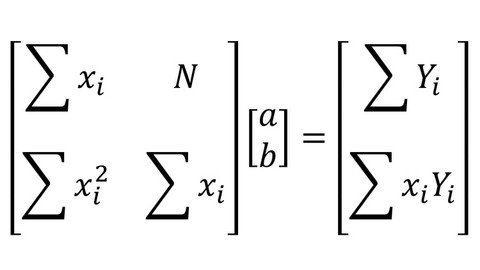
Lecture 33 Least Squares Fit Introduction
Lecture 34 Linear Least Squares Fit
Lecture 35 Quantification of Least Squares Fit Errors
Lecture 36 Quadratic Least Squares Fit and Example
Lecture 37 Exponential Least Squares Fits
Lecture 38 Lagrange Polynomials
Lecture 39 Linear Spline Interpolation
Lecture 40 Quadratic and Cubic Splines with Example
Advanced high school and college-level students in mathematics, engineering, and the sciences.
Homepage
https://www.udemy.com/course/applied-numerical-methods-for-engineering-science-students/DOWNLOAD LINK
Fikper
gbihe.Applied.Numerical.Methods.For.Engineering..Science.Students.rar.html
Rapidgator
gbihe.Applied.Numerical.Methods.For.Engineering..Science.Students.rar.html
Uploadgig
gbihe.Applied.Numerical.Methods.For.Engineering..Science.Students.rar
NitroFlare
gbihe.Applied.Numerical.Methods.For.Engineering..Science.Students.rar
Links are Interchangeable - No Password - Single Extraction
See full article